How to Mix Zhajiangmian in Beijing Without Drowning the Noodles in Sauce
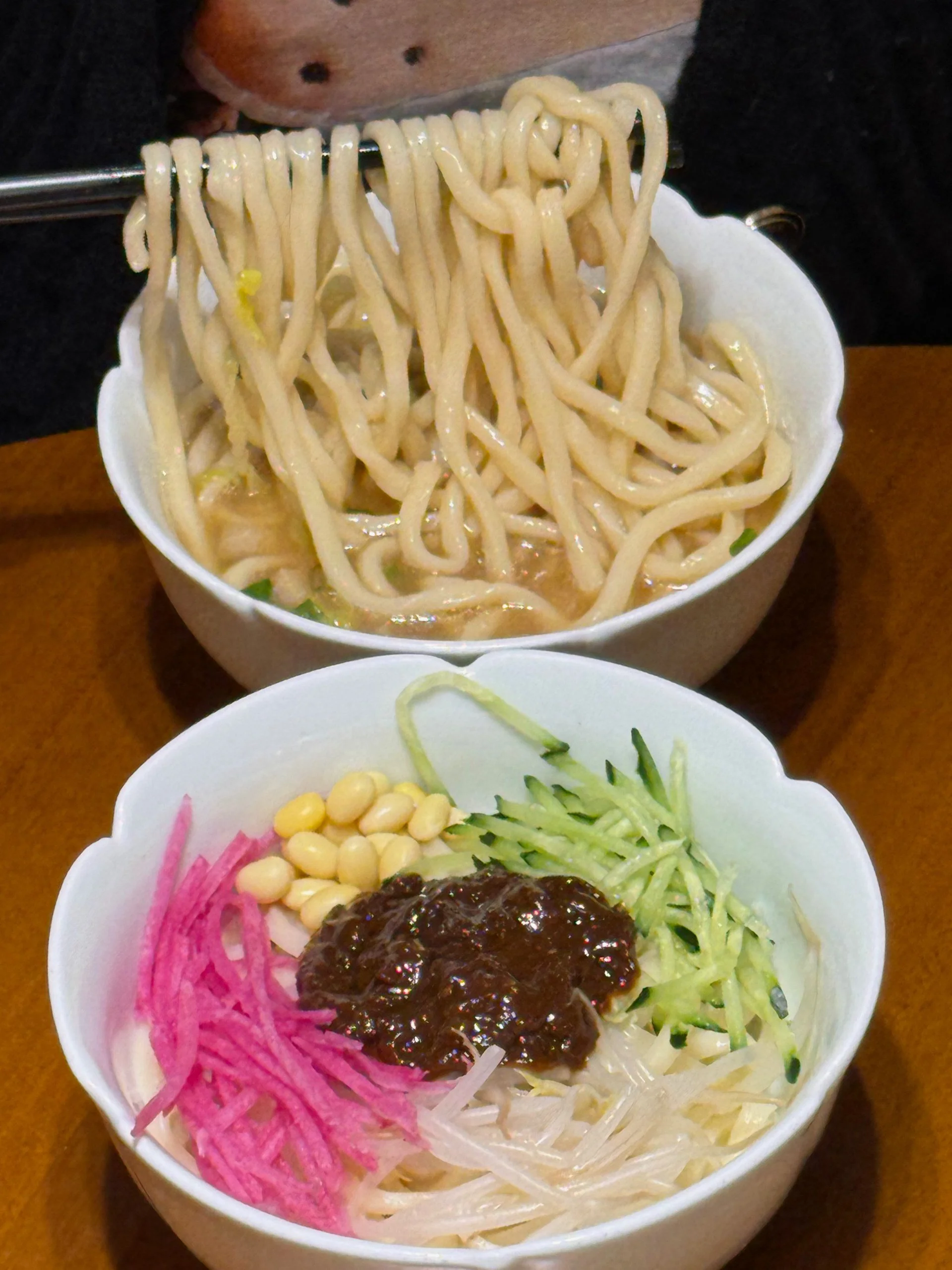
Zhajiangmian looks straightforward when the bowl arrives: noodles, dark fried sauce, fresh vegetable toppings, and sometimes a few small side ingredients. But the way you mix it changes the whole meal. Add too much sauce at once and the noodles become salty and heavy. Leave the toppings on the side and the bowl can taste flat. Mix too slowly and the noodles cool before the sauce coats them.
The best version is balanced. The sauce should cling to the noodles, the toppings should stay fresh, and the first few bites should taste savory without becoming dense. You do not need restaurant-level technique, but you do need a little patience before stirring everything together.
Do Not Pour All the Sauce Immediately
Some bowls arrive with sauce already on top. Others come with sauce in a separate bowl. If you have control, do not add every spoonful immediately. Beijing zhajiang sauce is concentrated because it is based on fried soybean paste, often with diced pork and a deep salty flavor.
Start with part of the sauce, mix, taste, then decide if you need more. This is especially useful if the restaurant serves a generous sauce portion. A little extra sauce can improve the bowl; too much can hide the wheat flavor of the noodles and the freshness of the toppings.
For a dish-level technique breakdown, the guide to how to mix Zhajiang Noodles in Beijing explains sauce amount, noodle texture, toppings, seasonal styles, and ordering tips.
Use Toppings as Balance
Cucumber, radish, bean sprouts, soybeans, cabbage, celery, and other toppings are not decoration. They cut through the salty sauce and make the bowl feel lighter. If you push them aside, the noodles can become too rich after only a few bites.
Mix the toppings into the noodles early, but not so aggressively that everything turns into one texture. The best bowl keeps a little crunch, a little freshness, and enough sauce to connect everything.
Watch the Noodle Texture
Zhajiangmian depends on noodle texture. The noodles should have enough body to carry the sauce. If they are too soft, heavy sauce makes them feel sticky. If they are too dry or cold, the sauce may sit unevenly and the bowl becomes hard to mix.
When the bowl arrives, mix while the noodles are still warm or freshly rinsed. Do not wait too long while taking photos, choosing extra dishes, or talking through the whole table order.
Photos Can Mislead the Sauce Ratio
Menu photos often show a dark sauce pile sitting neatly on white noodles with colorful toppings around it. That looks clear and attractive, but it is not the final eating state. The real dish happens after mixing.
The earlier post on reading Beijing food photos before ordering is useful here because zhajiangmian photos usually show components, not the finished balance.
Know What the Toppings Are Doing
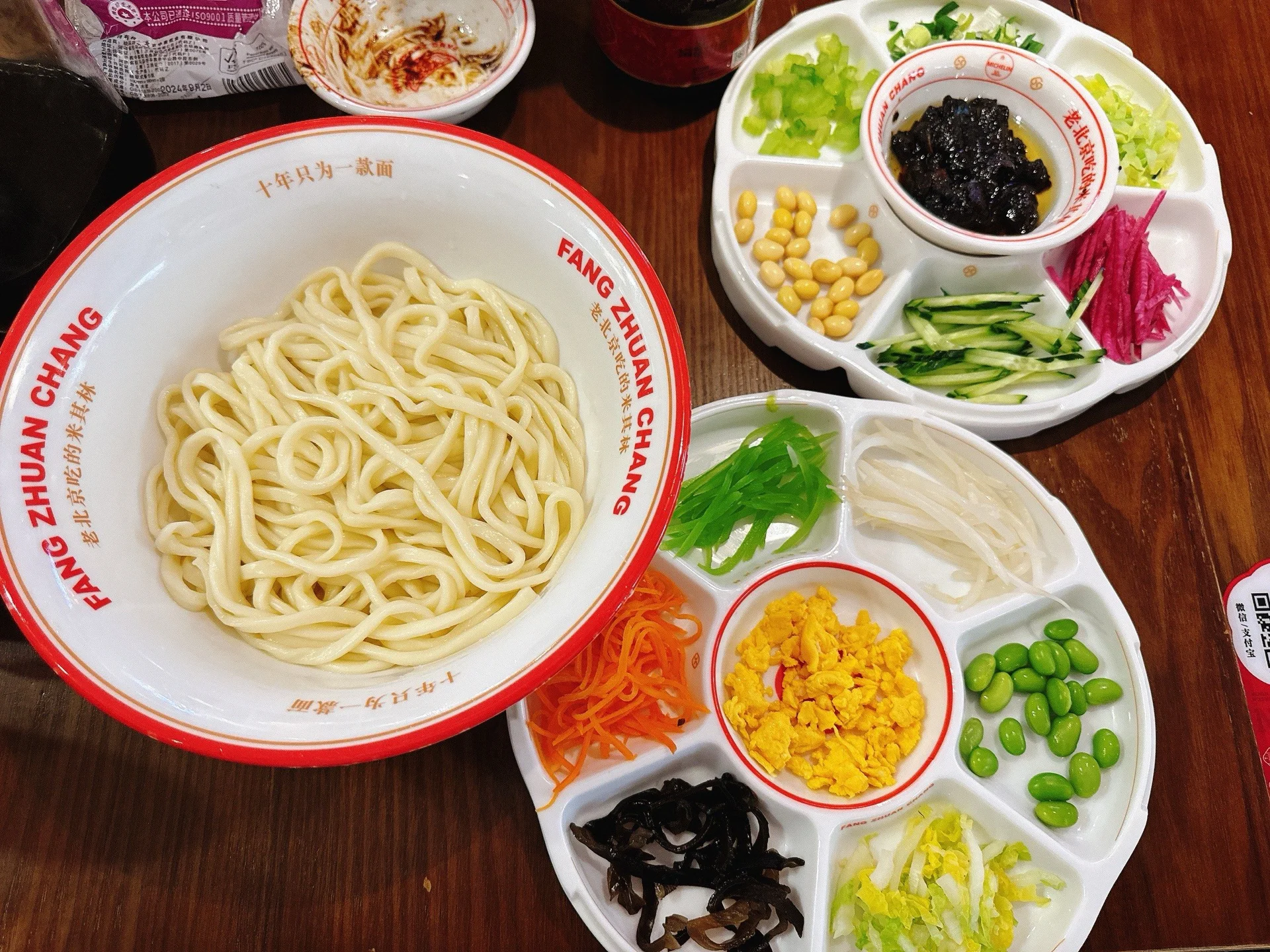
Each topping has a job. Cucumber brings crisp freshness. Radish can add bite. Bean sprouts give water and crunch. Soybeans add small firm texture. Cabbage or celery can make the bowl feel less heavy. Garlic, if served, changes the flavor more sharply.
If you want to understand the topping side in more detail, this guide to Zhajiang Noodle toppings explains why the fresh vegetables matter and how they change the final bowl.
Order It as a Meal, Not a Side
Zhajiangmian is usually enough for one person. It may look less dramatic than duck or hotpot, but the noodles and sauce are filling. If you also order several fried dishes, buns, and snacks, the meal can become heavier than expected.
The post on ordering Zhajiangmian in Beijing from menu clues is a good companion because it focuses on recognizing the dish before the bowl reaches the table.
Mix in Stages
A practical way to mix is simple: loosen the noodles first, add part of the sauce, lift and fold the noodles instead of crushing them, mix in toppings, then taste. Add more sauce only if the noodles still feel under-seasoned.
If the sauce is very strong, leave a little behind. Finishing every drop is not the goal. A balanced bowl is better than a fully emptied sauce cup.
Cold or Warm Styles
Some zhajiangmian bowls feel cooler and more refreshing, especially in warm weather. Others feel warmer and heartier. The same sauce can feel different depending on noodle temperature and topping choice.
In summer, the fresh toppings matter more because they keep the bowl bright. In colder weather, the sauce and noodle body may feel more central. Either way, the mixing rule stays the same: sauce should coat the noodles, not bury them.
Use Menu Clues Before Ordering
If you cannot read the menu fully, look for photos of dark sauce, fresh cucumber strips, and plain wheat noodles. Zhajiangmian may appear under noodle sections rather than main dishes. Portion size is usually one-person friendly, but toppings and sauce can vary by shop.
The broader post on using a Beijing food menu when you do not read Chinese can help with this kind of ordering because the visual clues are usually stronger than a single translated word.
The Main Rule
Do not treat zhajiangmian as noodles plus unlimited sauce. Treat it as a balance of wheat noodles, concentrated soybean paste, diced meat, and fresh toppings. Add sauce gradually, mix while the noodles are ready, and let the vegetables do their job.
When the bowl is mixed well, zhajiangmian tastes savory, fresh, and filling without becoming too salty. That balance is what makes it one of Beijing's most practical noodle meals.


Comments
Post a Comment