What to Order for a First Beijing Breakfast: Jianbing, Baozi, Douzhi, and Simple Menu Tips
A first Beijing breakfast can be one of the easiest meals of the trip, but it can also be one of the most confusing. Many breakfast shops are busy, the menu may be written only in Chinese, and the best items are often ordered quickly by regular customers who already know the routine.
The good news is that you do not need to understand every breakfast word before ordering. Start with a few common categories, choose one safe item, and add one local item if you want to explore. If you are still getting used to dish names and menu photos, it helps to first read this guide to using a Beijing food menu when you do not read Chinese.
Start With a Simple Breakfast Plan
For a first morning in Beijing, do not try to order everything at once. A better plan is to choose one main item, one drink or soup, and one small side if the shop offers it. This keeps the meal easy and lets you understand how the breakfast counter works.
A beginner-friendly breakfast might be jianbing with soy milk. A more filling option might be baozi with a warm bowl of soup or porridge. A more local choice might include douzhi with jiaoquan, but that combination is stronger in flavor and not always the best first bite for every traveler.
For a wider list of morning dishes, the Beijing breakfast guide gives a broader overview of douzhi, jiaoquan, jianbing, baozi, shaobing, youtiao, chaogan, and other common breakfast foods.
Jianbing: The Easy First Choice
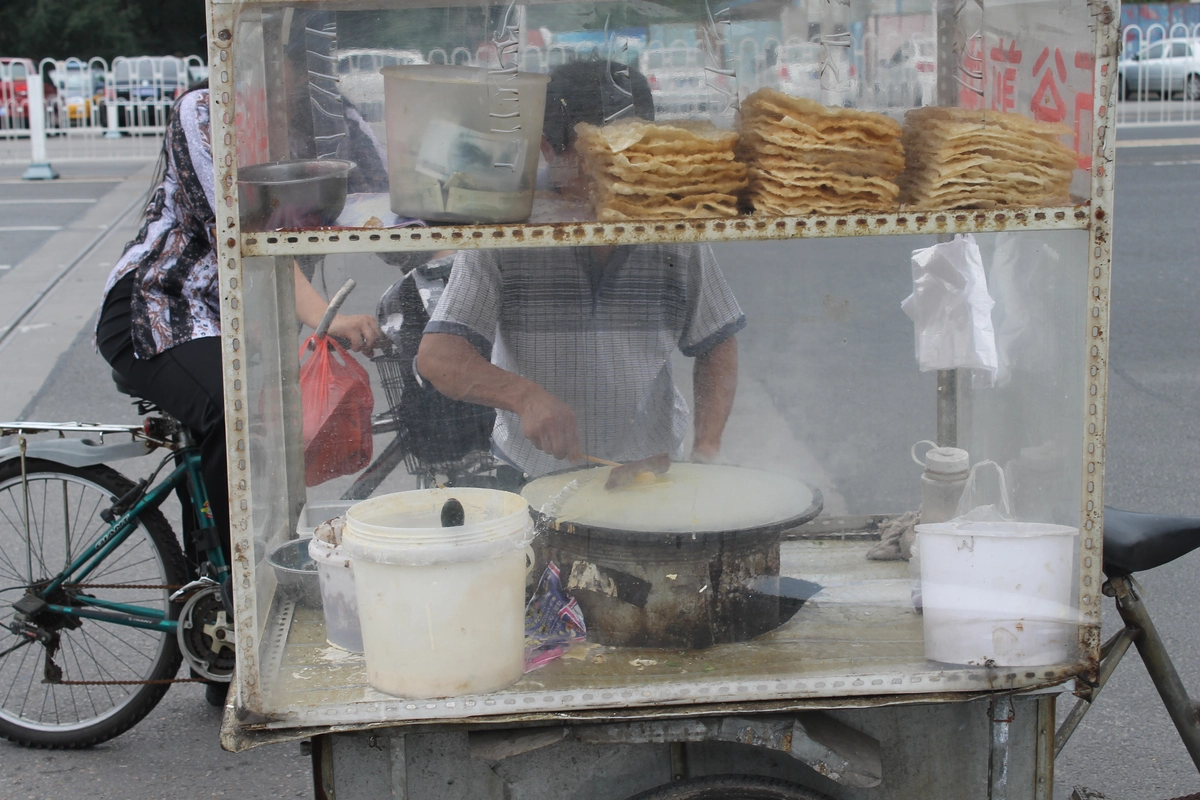
Jianbing is one of the easiest Beijing breakfast foods for visitors to understand. It is made on a hot griddle, usually with batter, egg, sauce, scallions, cilantro, chili if you want it, and a crispy cracker folded inside. You can watch the whole process while it is being made, which makes ordering less stressful.
If you are unsure what to say, point to jianbing, ask for one, and skip chili if you do not want spice. The vendor may ask about extra egg, sausage, or other fillings. For a first try, a basic version is enough because the sauce, egg, and crispy cracker already show the flavor and texture of the snack.
A useful detail is timing. Jianbing is best when it is fresh and hot. If a stall has a small line and the vendor is cooking continuously, that is usually better than a cold pre-made item sitting on a tray.
Baozi: Safe, Warm, and Filling
Baozi are steamed buns with fillings. They are a good choice when you want something warm, quick, and easy to share. Common fillings may include pork, beef, lamb, vegetables, egg, chives, mushrooms, or other savory mixtures. In a small breakfast shop, you may see them stacked in bamboo or metal steamers near the counter.
For travelers, baozi are useful because they do not require much explanation. You can order by pointing, choosing a number, and asking for a few pieces. If you are not sure about the filling, choose a popular tray that other customers are buying from. Baozi also pair well with soy milk, millet porridge, or a simple soup.
Youtiao, Shaobing, and Other Wheat Staples
Beijing breakfast is strongly connected to wheat-based foods. Youtiao are long fried dough sticks, often eaten with soy milk or porridge. Shaobing is a baked flatbread, sometimes plain, sesame-covered, stuffed, or paired with other items. These foods are simple, filling, and common in breakfast shops.
If you see a tray of golden fried dough, baked flatbread, or small pancakes, ask yourself whether you want a dry, bread-like breakfast or something with soup or drink on the side. Dry wheat staples are easy to order, but they are better with a warm drink or savory soup.
Douzhi and Jiaoquan: Very Local, Not Always Beginner-Friendly
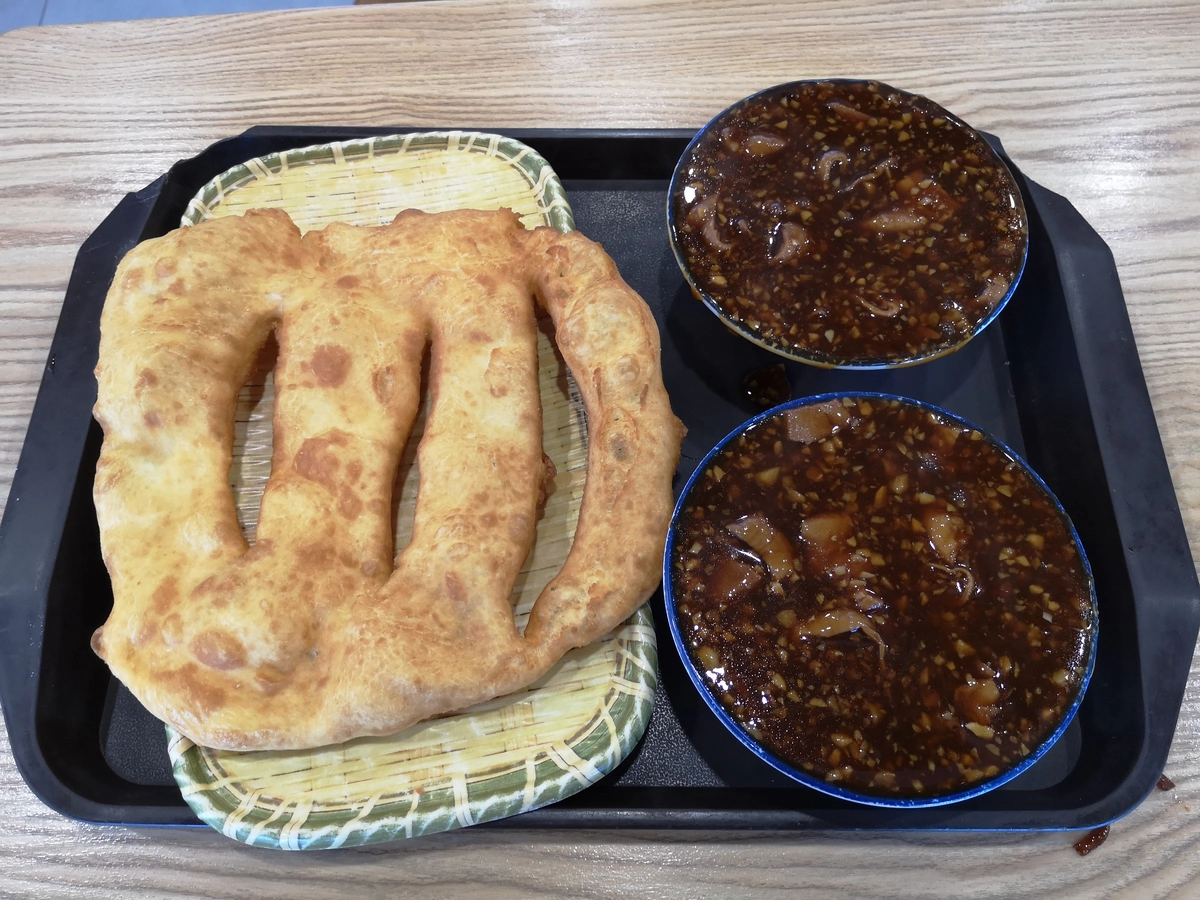
Douzhi is one of Beijing's most famous local breakfast drinks, but it is not mild. It is a fermented mung bean drink with a sour taste and a strong aroma. Locals often pair it with jiaoquan, a crispy fried ring, and sometimes pickled vegetables. For people who enjoy fermented flavors, it can be memorable. For a first-time visitor expecting ordinary soy milk, it can be surprising.
That does not mean you should avoid it. It means you should understand what you are ordering. If you want a gentle first breakfast, start with jianbing or baozi. If you specifically want a local Beijing experience, try douzhi with jiaoquan in a small amount and treat it as a cultural food, not just a drink.
Chaogan: A Heavier Morning Bowl
Chaogan is another local breakfast dish that can confuse visitors because the name alone does not explain the bowl. It is a thick, savory dish often associated with pork liver and intestine, garlic aroma, and a glossy starch-thickened texture. It is warming and traditional, but it is richer than a simple bun or pancake.
If you like strong savory breakfasts, chaogan can be interesting. If you prefer a light morning meal, save it for another day after you have tried easier breakfast foods first.
How to Judge a Breakfast Shop Quickly
A good breakfast shop does not need to look fancy. Look for steady customer flow, food being made fresh, clear steam from buns or soups, and staff who move quickly. A short line is often a good sign because breakfast foods are best when turnover is high.
Photos can help, but real activity matters more. If many people are ordering the same item, that dish is probably fresh. If a tray looks untouched for a long time, choose something else. For street stalls, watch whether the vendor cooks each order in front of you.
Three First-Breakfast Orders
If you want the safest option, order jianbing without chili and a warm soy milk. This gives you a classic Beijing street-breakfast feeling without too much risk.
If you want something more filling, order two or three baozi with porridge or soup. This is practical before a long sightseeing day because it is warm, quick, and easy to carry if needed.
If you want a more local breakfast, try douzhi with jiaoquan or chaogan with a simple wheat side. These choices are more distinctive, so order small portions if possible.
Useful Menu Clues
- Egg: often appears in jianbing or breakfast pancakes.
- Chili: optional at many jianbing stalls, so ask to skip it if needed.
- Steamed: often points toward buns, dumplings, or soft wheat foods.
- Fried: often points toward youtiao, jiaoquan, or crisp snacks.
- Soup or porridge: useful when ordering dry breads or buns.
For a more focused look at one of the easiest street breakfasts, the guide to jianbing in Beijing explains the egg, sauce, scallions, chili, crispy cracker, fillings, timing, and basic ordering tips.
A Good First Morning Strategy
Start simple on the first morning. Choose one dish you can understand from the cooking process, such as jianbing or baozi. Add a warm drink or soup. Then make a note of the foods you saw but did not try. Beijing breakfast is easier when you treat it as a series of small discoveries instead of one big menu test.
By the second or third morning, you can move toward stronger local choices such as douzhi, jiaoquan, chaogan, or more specialized breakfast-shop items. The best Beijing breakfast is not only about finding the most famous dish. It is about matching the food to your comfort level, the time of day, and the kind of local experience you want.


Comments
Post a Comment