How to Read Beijing Food Photos Before Ordering: Snack, Noodle Bowl, or Full Meal?
Food photos help a lot when you cannot read every Chinese character on a Beijing menu, but photos can also mislead you. A bowl may look small and turn out to be a filling lunch. A snack may look like dessert but taste sour, crisp, or seasonal. A breakfast item may look simple, yet the sauce, filling, or ordering speed can make it confusing for a first-time visitor.
The useful question is not only “What is this dish?” It is also “What kind of eating situation does this photo show?” If you can tell whether the item is a quick snack, a noodle bowl, a breakfast counter food, or a shared meal, ordering becomes much easier.
Look at the Format First
Before thinking about ingredients, look at the format. Is the food on a skewer, in a bowl, folded like a pancake, stacked in a steamer, or served as a large shared plate? Format often tells you more than the dish name.
A skewer usually means snack. A deep bowl often means noodles, soup, porridge, or a one-person meal. A folded pancake often points toward breakfast or street food. A large plate or pot usually means sharing. If the food is shown with small sides, dipping sauce, or several plates, it may be part of a longer meal rather than a single quick order.
If you are still building basic menu confidence, the earlier post on using a Beijing food menu when you do not read Chinese is the best starting point. Photos are useful, but they work best when you combine them with dish type, timing, and eating style.
Breakfast Photos Often Show Speed
Beijing breakfast photos often show foods that are fast to make or easy to take away. Jianbing may appear as a folded crepe with egg, sauce, scallions, and a crispy cracker inside. Baozi may appear as round steamed buns. Youtiao looks like long fried dough. Douzhi may appear as a pale drink or bowl, but the flavor is much stronger than the photo suggests.
The photo can tell you whether the food is cooked in front of you, held in a steamer, or served from a pot. That matters because breakfast shops move quickly. If you see a photo of a griddle item, expect a short wait while it is made. If you see steamed buns, ordering may be as simple as pointing and choosing a quantity.
For morning choices, think about whether the food is cooked in front of you, held warm in a steamer, or served quickly from a pot. That simple observation can help you choose between jianbing, baozi, douzhi, and other common breakfast foods.
Noodle Photos Need Sauce Clues
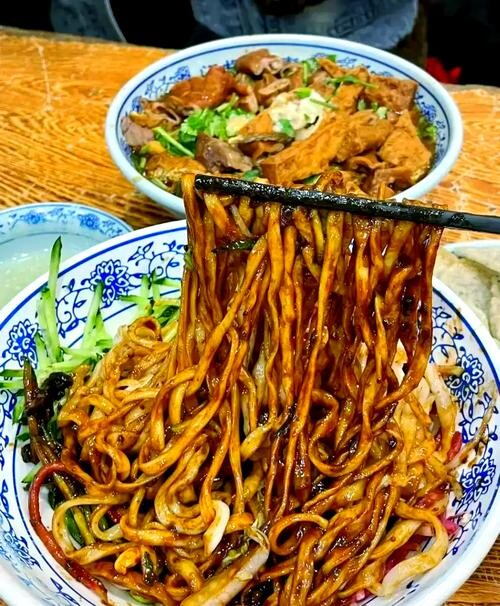
Noodle photos can be harder to read than they first appear. The most important question is whether the noodles are in soup, served dry, or meant to be mixed with sauce. A dry-looking bowl with dark sauce and fresh vegetables is very different from a hot noodle soup.
Zhajiangmian is a good example. The photo may show noodles, dark sauce, and vegetables, but the real action happens after mixing. The sauce is concentrated, the vegetables balance the saltiness, and the noodles carry the flavor. If you eat only the top layer, you miss the point of the bowl.
If a noodle photo shows separate toppings, sauce, or vegetable strips, assume the dish may need mixing. The guide to ordering zhajiangmian in Beijing explains how sauce, toppings, and noodle texture work together.
Snack Photos Are About Timing and Texture
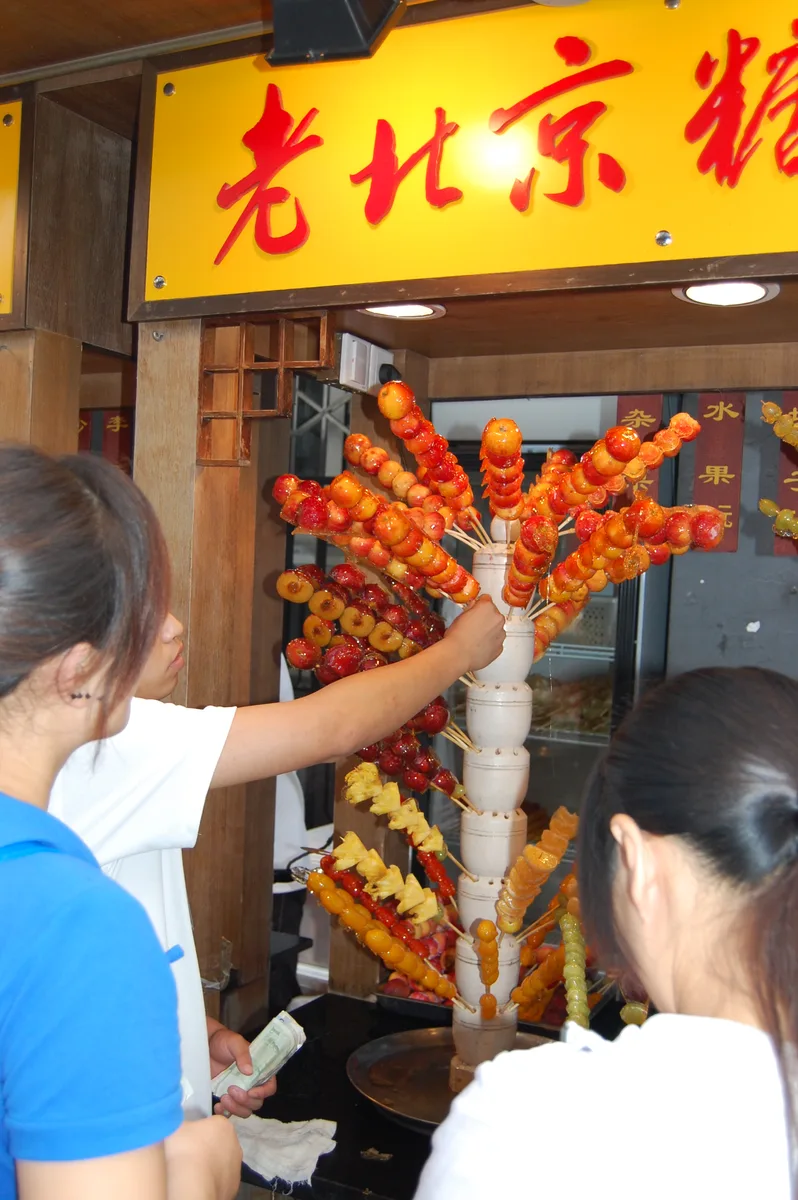
Street snack photos often show color and shape, but they do not always show freshness. For snacks, timing and texture matter. Is the item fried and still crisp? Is the sugar shell glossy and firm? Is the pancake being made fresh, or has it been sitting too long?
Tanghulu is one of the easiest examples. It is bright, beautiful, and easy to recognize, but the best version depends on a crisp sugar shell and fresh fruit. A photo can help you identify the snack, but the actual skewer should still look clear, firm, and not sticky.
For a snack like this, the photo gives you the category, while the vendor display tells you whether to buy. The post on how to buy tanghulu in Beijing covers those freshness clues in more detail.
Watch for Portion Signals
A photo can also help you guess portion size. A single bowl with noodles or porridge is probably enough for one person. A skewer is usually a snack. A pancake may be one person’s breakfast. A large pot, whole duck, or table full of small plates usually means sharing.
If you are not sure, look around the restaurant or stall. What are other customers eating? Are people ordering one bowl each, or is the table sharing several dishes? In Beijing, some foods are designed for quick solo eating, while others make more sense with a group.
Do Not Let Beautiful Photos Push You to Overorder
Menus are designed to make food look good. When every dish looks attractive, it is easy to order too much. A better approach is to choose one food that matches the moment. Breakfast item in the morning. Noodle bowl for a simple lunch. Small snack during a walk. Shared meal only when you have time and appetite.
A simple day can follow this same idea: breakfast, noodles, and a street snack can be enough for one satisfying day without overordering.
A Simple Photo-Reading Checklist
- Shape: skewer, bowl, pancake, bun, pot, or shared plate.
- Timing: breakfast counter, lunch bowl, afternoon snack, or dinner meal.
- Texture: crispy, soupy, chewy, sauced, steamed, fried, or roasted.
- Portion: one-person food or group food.
- Action: eat directly, mix first, dip in sauce, wrap, or share.
Once you think this way, menu photos become more useful. You are no longer just guessing the name of a dish. You are reading the eating situation behind the photo. That is often enough to order with more confidence, even before you understand every word on the menu.


Comments
Post a Comment