Tanghulu in Beijing: How to Buy the Candied Hawthorn Street Snack Without Guessing
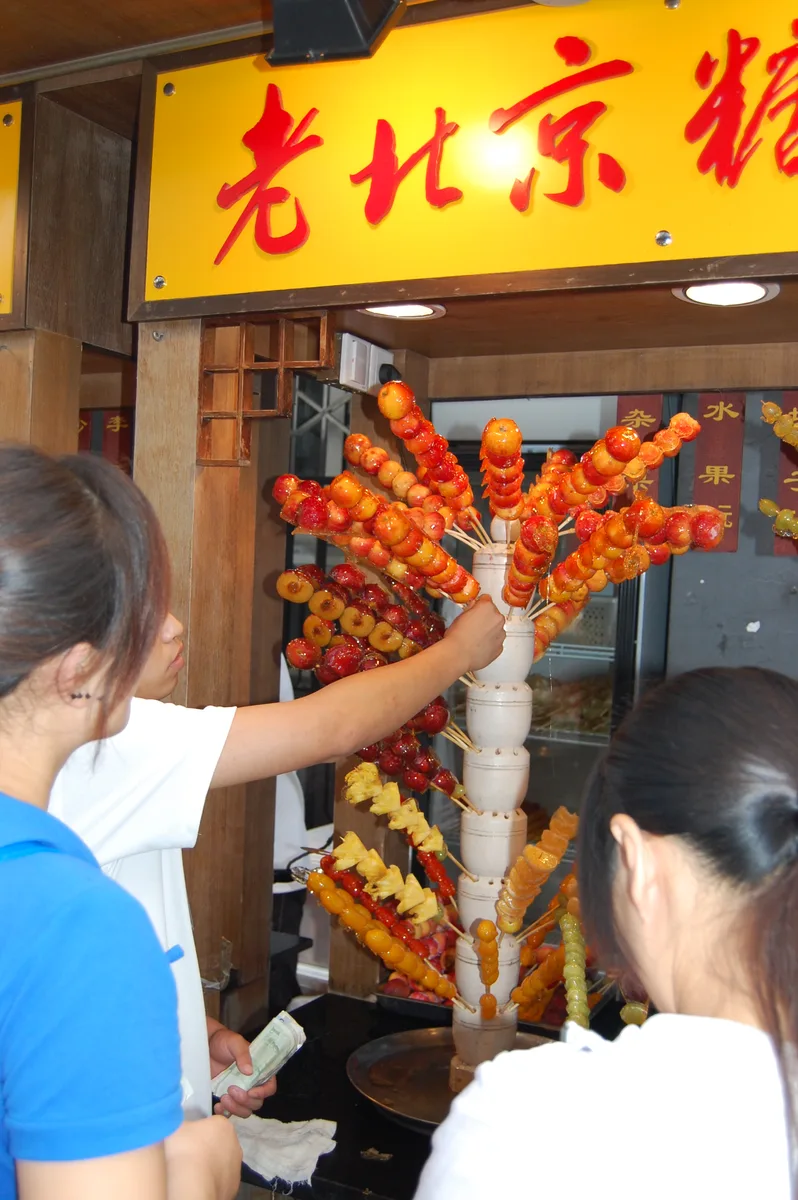
Tanghulu is one of the easiest Beijing snacks to recognize. The bright red hawthorn berries, the glossy sugar shell, and the long bamboo skewer make it stand out even when you cannot read the sign. It looks simple, but a good tanghulu experience still depends on timing, freshness, fruit choice, and knowing what you are buying.
If you are still learning how to read Beijing food names and menu photos, start with the earlier guide to using a Beijing food menu when you do not read Chinese. Tanghulu is a useful snack to practice with because the visual clues are strong, but the details still matter.
What Tanghulu Is
Traditional tanghulu is made with hawthorn berries coated in a hard sugar shell. The outside should be crisp and glassy, while the fruit inside is tart. The appeal comes from contrast: sweet sugar, sour fruit, a quick crack when you bite, and a bright winter-street feeling.
Modern versions may use strawberries, grapes, oranges, kiwi, cherry tomatoes, or mixed fruit. Those can be fun, but classic hawthorn tanghulu remains the version most closely tied to Beijing street snack culture. If you are trying it for the first time, hawthorn is the best starting point.
For a fuller dish reference, the main Tanghulu in Beijing guide explains candied hawthorn, crisp sugar shells, seasonal buying tips, and modern fruit versions.
When Tanghulu Tastes Best
Tanghulu is strongly associated with colder weather. Cool air helps the sugar shell stay crisp. On a cold day, the coating can crack cleanly and the fruit feels refreshing. In warm weather, the sugar may soften faster, become sticky, or lose the clean snap that makes the snack enjoyable.
If you see tanghulu displayed in direct sun or sitting out for a long time, be careful. A skewer that looks glossy but slightly melted may be too sticky. A fresh skewer should look clear, bright, and firm, not wet or sagging.
How to Choose a Good Skewer
Start by looking at the sugar shell. It should be thin enough to bite through but solid enough to crack. Very thick sugar can make the snack hard to eat. Very thin or melted sugar can feel sticky instead of crisp.
Next, look at the fruit. Hawthorn berries should look firm and evenly coated. Avoid skewers where the fruit looks bruised, leaking, or unevenly covered. If the vendor has several skewers, choose one that looks freshly made and cleanly coated.
For mixed-fruit tanghulu, check whether the fruit pieces are dry enough to hold the sugar. Watery fruit can make the shell break down faster. This is one reason traditional hawthorn works so well.
Is Tanghulu a Dessert, Snack, or Street Food?
Tanghulu sits somewhere between dessert and street snack. It is usually not a full meal, and it is not eaten like a restaurant dessert after a long dinner. It is more often a small bite while walking, shopping, visiting a park area, or exploring a snack street.
If yesterday's breakfast guide helped you choose a morning meal, tanghulu belongs to a different part of the day. The post on what to order for a first Beijing breakfast covers jianbing, baozi, and douzhi; tanghulu is better treated as a later snack rather than the main start to the day.
Where It Fits With Other Beijing Street Foods
Tanghulu is one of the most visitor-friendly Beijing snacks because it is easy to identify and easy to buy. It does not require a long conversation with the vendor. You can point, pay, and eat it while walking. But it is only one part of the wider street-food picture.
Other Beijing street foods may be more filling, such as jianbing or baozi. Some are more local and acquired in taste, such as douzhi with jiaoquan. Some are more seasonal or situational. A good street-food day is not about eating everything at once; it is about choosing a few snacks that fit the weather, time, and your appetite.
To place tanghulu alongside other local snacks, use the Beijing street food guide, which covers jianbing, douzhi, jiaoquan, tanghulu, baozi, fried dough, snack-shop sweets, and ordering tips.
Simple Buying Tips
- Choose a fresh-looking sugar shell: clear, glossy, and firm is better than sticky or dull.
- Start with hawthorn: it gives the classic sweet-and-sour flavor.
- Eat it soon: tanghulu is best before the sugar softens.
- Watch the weather: cold days are better for crisp texture.
- Check the fruit: avoid bruised, leaking, or unevenly coated pieces.
How to Eat It Without Making a Mess
Tanghulu is hard sugar over fruit, so do not bite too aggressively at first. Take smaller bites and expect the shell to crack. If the sugar is very hard, let it break naturally instead of trying to chew through the entire piece at once.
Because the fruit can be tart and juicy, it is useful to have a napkin. If you are walking, take your time. The skewer can be longer than expected, and the sugar shell can be sharp when it cracks.
What Flavor to Expect
Classic hawthorn tanghulu is not just sweet. The fruit is sour, sometimes quite tart, and that is part of the point. The sugar shell gives the first sweet crack, then the hawthorn brings acidity. If you prefer milder fruit, a strawberry or mixed-fruit version may be easier, but it will feel less traditional.
For travelers, tanghulu is a good reminder that Beijing snacks are not all heavy, salty, or wheat-based. Some are bright, crisp, seasonal, and playful. It is a small snack, but it gives a clear taste of how street food can be visual, portable, and tied to local memory.
A Good Way to Try Tanghulu
Try one classic hawthorn skewer first. Eat it soon after buying, preferably on a cool day. If you like the contrast of sour fruit and crisp sugar, try a modern fruit version another time. If it feels too sharp or too sweet, treat it as a short street-food experience rather than a dessert you need to finish.
The best way to approach tanghulu is not to overthink it. Look for freshness, choose a classic skewer, and enjoy the texture while it is still crisp. Among Beijing snacks, few foods are easier to spot or more memorable from a single bite.


Comments
Post a Comment