How to Build a Beijing Hotpot Dipping Sauce Without Hiding the Lamb
At a Beijing hotpot table, the sauce bowl is not an afterthought. It is where sesame paste, fermented tofu, leek flower sauce, garlic, herbs, and a little heat come together. The goal is not to make the strongest bowl possible. A good sauce should make thin lamb taste fuller while still letting the clean flavor of the meat and broth come through.
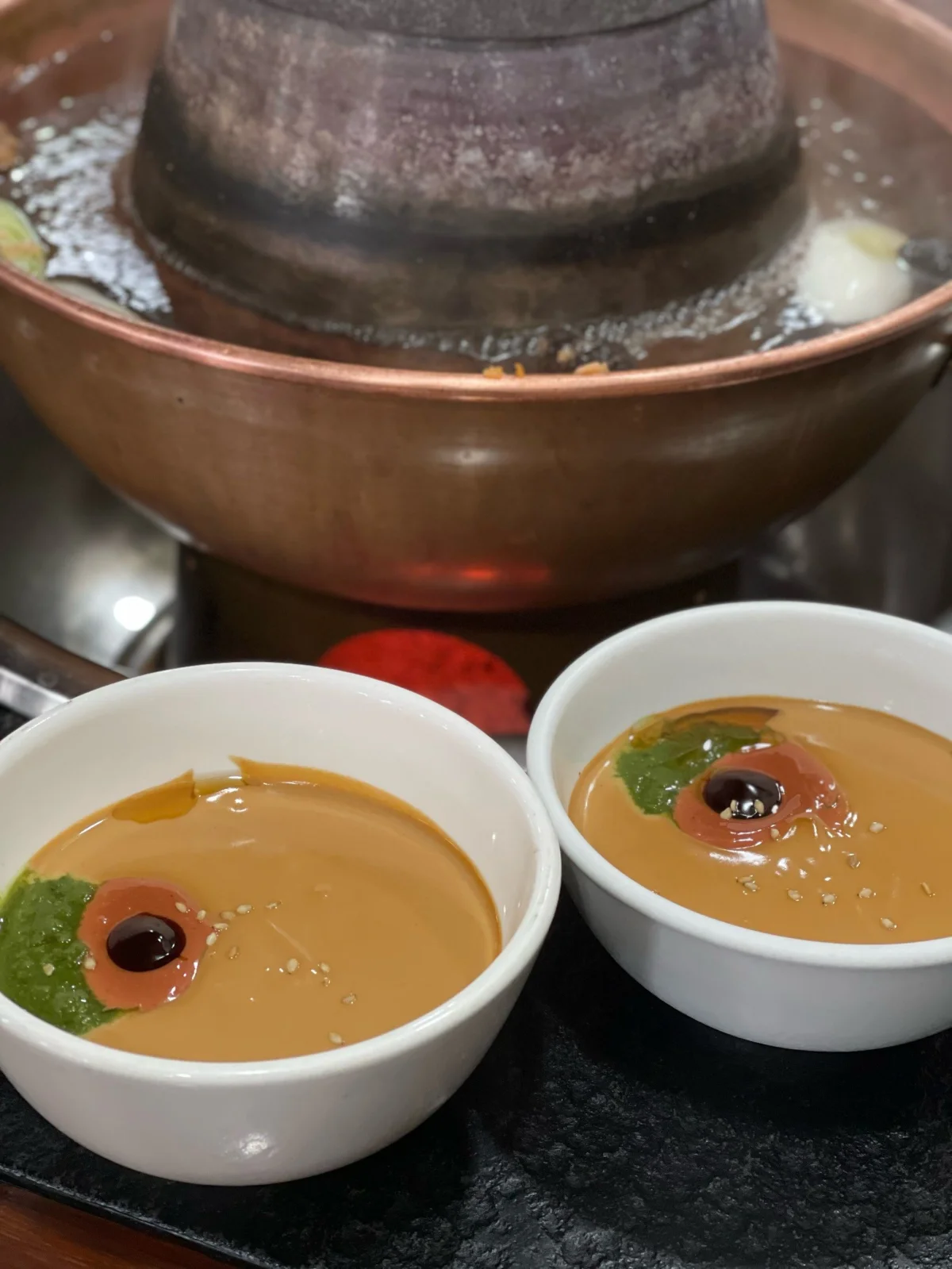
Begin with sesame paste, then loosen it slowly
Start with two small spoonfuls of sesame paste. It is thick and concentrated, so do not try to eat it at that texture. Add water, broth, or a little sesame oil in small amounts and stir patiently until the sauce becomes smooth enough to coat a slice of lamb. It should fall from a spoon slowly, not sit in the bowl like a heavy paste.
This first step determines the whole bowl. When the base is too thick, every salty condiment feels amplified. When it is too thin, the sauce slips off the meat and loses its nutty aroma. It is better to make a modest bowl first and adjust after trying one piece of lamb than to fill the bowl with every option at the sauce station.
Add the salty and fragrant parts one at a time
Fermented tofu adds salt and depth, while leek flower sauce brings a sharper, green, savory note. Both are useful, but both can take over quickly. For a first bowl, use a small amount of each, then stir and taste. Cilantro and scallion can go in more freely if you enjoy them; they lighten the sesame paste and make a rich broth feel less heavy.
Garlic is best treated as an accent. A few pieces make the sauce brighter, especially with lamb, but a large spoonful can leave the bowl tasting only of raw garlic. Chili oil works the same way. Beijing-style hotpot sauce is usually sesame-forward first, so add heat after you have found the balance of paste, fermented tofu, and leek flower sauce.
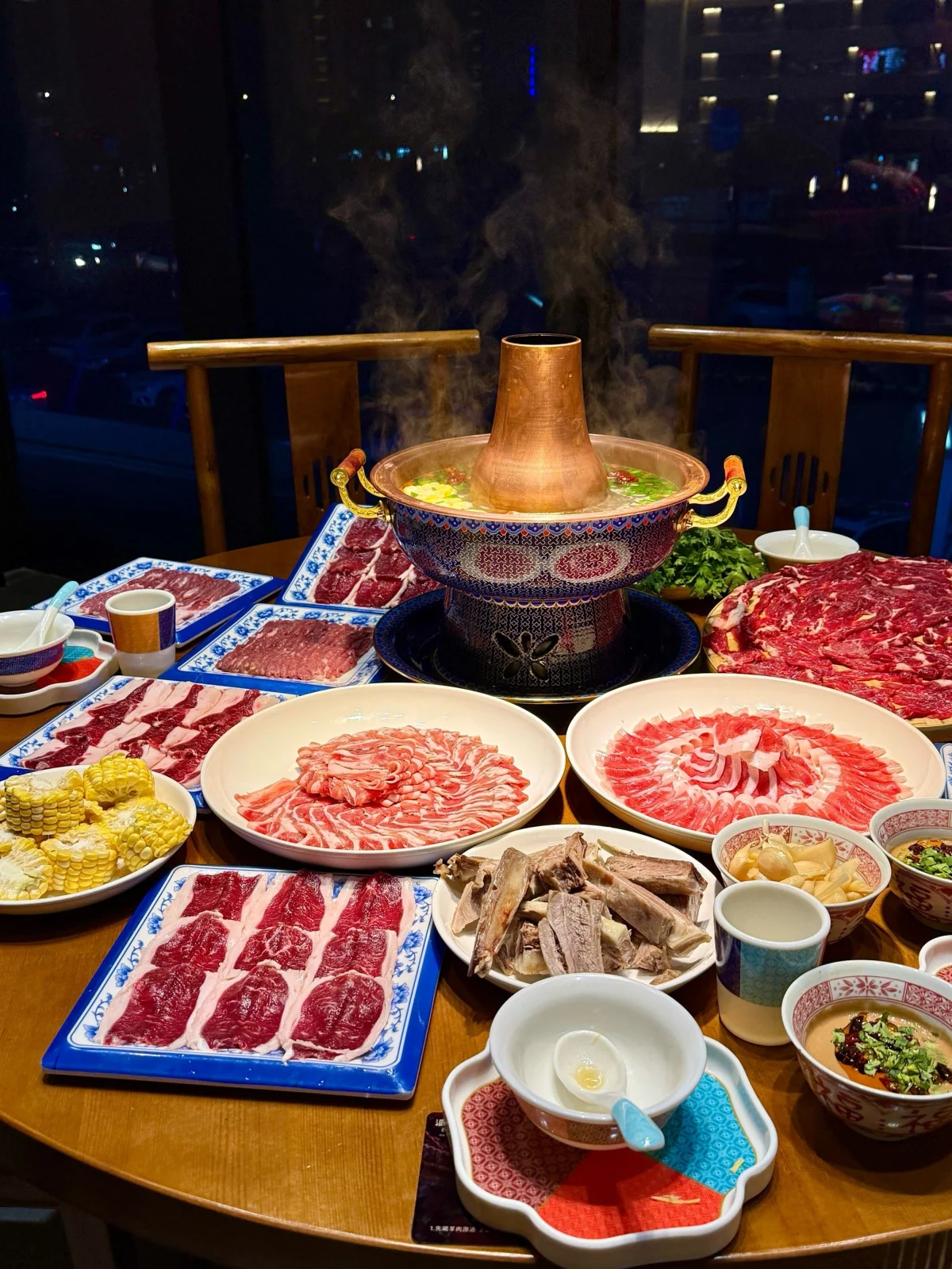
Match the sauce to what is in the pot
For thin lamb in a clear broth, keep the bowl classic and restrained. Sesame paste, a little fermented tofu, leek flower sauce, cilantro, and scallion are enough. With tofu, mushrooms, cabbage, and noodles, you can make the sauce slightly more aromatic because these ingredients absorb flavor without becoming overwhelmed.
A richer meal calls for a brighter sauce. If you are eating a bone-heavy pot, such as the meal described in this lamb spine hotpot ordering guide, a touch more vinegar or chili can cut through the broth. Add it gradually. The sauce should refresh the next bite, not compete with the main pot.
Make a small second bowl instead of fixing a crowded first one
It is tempting to keep correcting one over-seasoned bowl. In practice, a fresh small bowl is often easier. Try a sesame-forward version first, then make a second bowl with more garlic, vinegar, or chili if you want a different direction. This also lets two diners share the same hotpot while finding their own balance.
The pacing matters as much as the ingredients. The broader advice in how to order Beijing hotpot without making the table too heavy applies here too: begin with the essential items, see how the meal develops, and add only what improves it. A sauce bowl follows the same logic.
Three easy mistakes to avoid
First, do not treat every condiment as mandatory. Second, do not make the sauce so spicy that it erases the taste of the lamb. Third, do not build a huge bowl before the first ingredients arrive at the table. Start small, taste with something simple, and change one element at a time.
That approach makes a hotpot meal easier to enjoy, especially when several dishes are arriving together. If the table is already full, the practical portion advice in this Beijing restaurant overordering guide is a useful reminder: contrast and pacing usually make a meal better than adding one more heavy flavor. A balanced sauce does the same thing for every bite from the pot.


Comments
Post a Comment