When to Order Peking Duck in Beijing: Plan It as a Meal, Not a Quick Snack
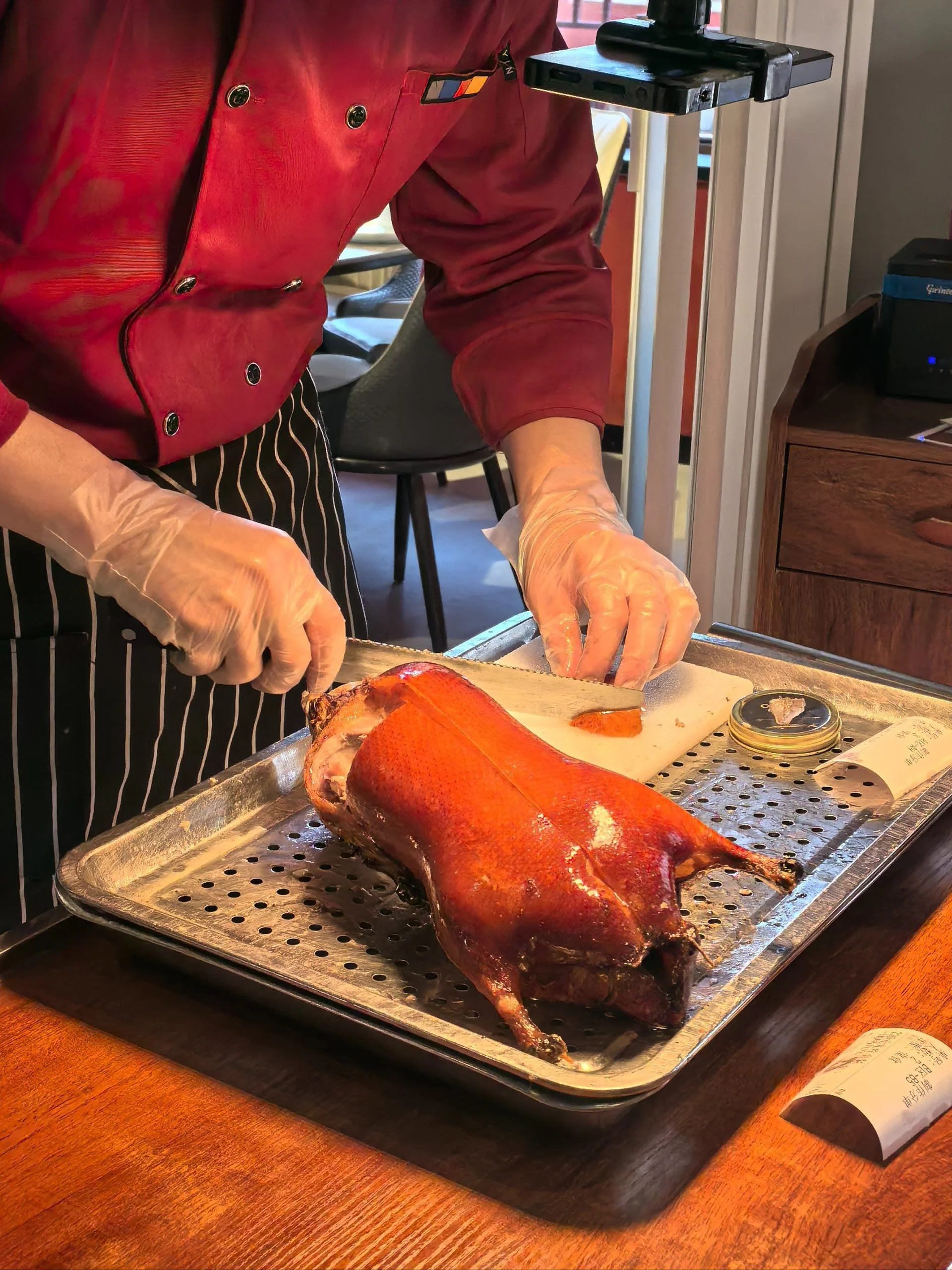
Peking duck is one of the most famous foods in Beijing, but it is not the kind of dish you should squeeze into the day like a quick street snack. It is a meal with timing, table space, pancakes, sauce, condiments, carving, and usually a few people sharing. If you treat it like one more item on a long checklist, it can feel heavy and rushed.
The better way is to plan Peking duck as the center of a meal. That does not mean the meal has to be formal or expensive, but it does mean you should leave enough appetite and time to enjoy the sequence. Duck is different from a noodle bowl, a breakfast pancake, or a walking snack.
Do Not Order It When You Are Already Full
Many travelers make the mistake of eating a large lunch, adding snacks in the afternoon, and then booking duck for dinner because it is famous. By the time the duck arrives, they are already tired and full. The pancakes feel heavy, the side dishes pile up, and the meal becomes more about finishing food than enjoying it.
If you know you want duck at night, keep the earlier part of the day lighter. A simple breakfast, a modest lunch, and maybe one small snack are enough. The recent post on avoiding overordering in Beijing restaurants explains this rhythm in more detail.
Understand What Comes With the Duck
Peking duck is not just slices of meat. A typical meal includes thin pancakes, sweet bean sauce, scallion, cucumber, sometimes sugar for crisp skin, and possibly other duck parts or a duck frame option. Restaurants may also suggest cold dishes, vegetables, soup, or extra staples.
This is why portion planning matters. Even if the duck itself looks manageable, the whole table can become filling. If you are with two people, be careful with extra dishes. If you are with a larger group, the meal becomes easier because everyone can share the duck and sides more naturally.
For a dish-level overview, this Peking Duck in Beijing guide explains roast duck technique, crisp skin, pancakes, sweet bean sauce, carving, and local dining tips.
When Peking Duck Fits Best
Peking duck works best as lunch or dinner when you have a real table meal planned. It is especially good when you have at least two people, enough time to sit down, and no need to rush to the next attraction. It is less suitable when you only want a quick bite before a train, museum visit, or long walk.
If you are spending the day exploring, think about whether duck should be the anchor meal. If it is, build the rest of the food day around it. A lighter noodle lunch or a small snack can make the duck meal better later.
How to Read Duck Photos on a Menu
Duck photos can be beautiful, but they do not always show the full meal. A photo may focus on crisp skin, sliced meat, pancakes, or the whole roasted duck. Look for clues: are pancakes shown? Is sauce visible? Are scallions and cucumber included? Is the image showing a whole duck, half duck, or only a plated portion?
The earlier guide to reading Beijing food photos before ordering is useful here because duck photos often show a serving style rather than a simple one-person portion.
How to Eat It Without Rushing
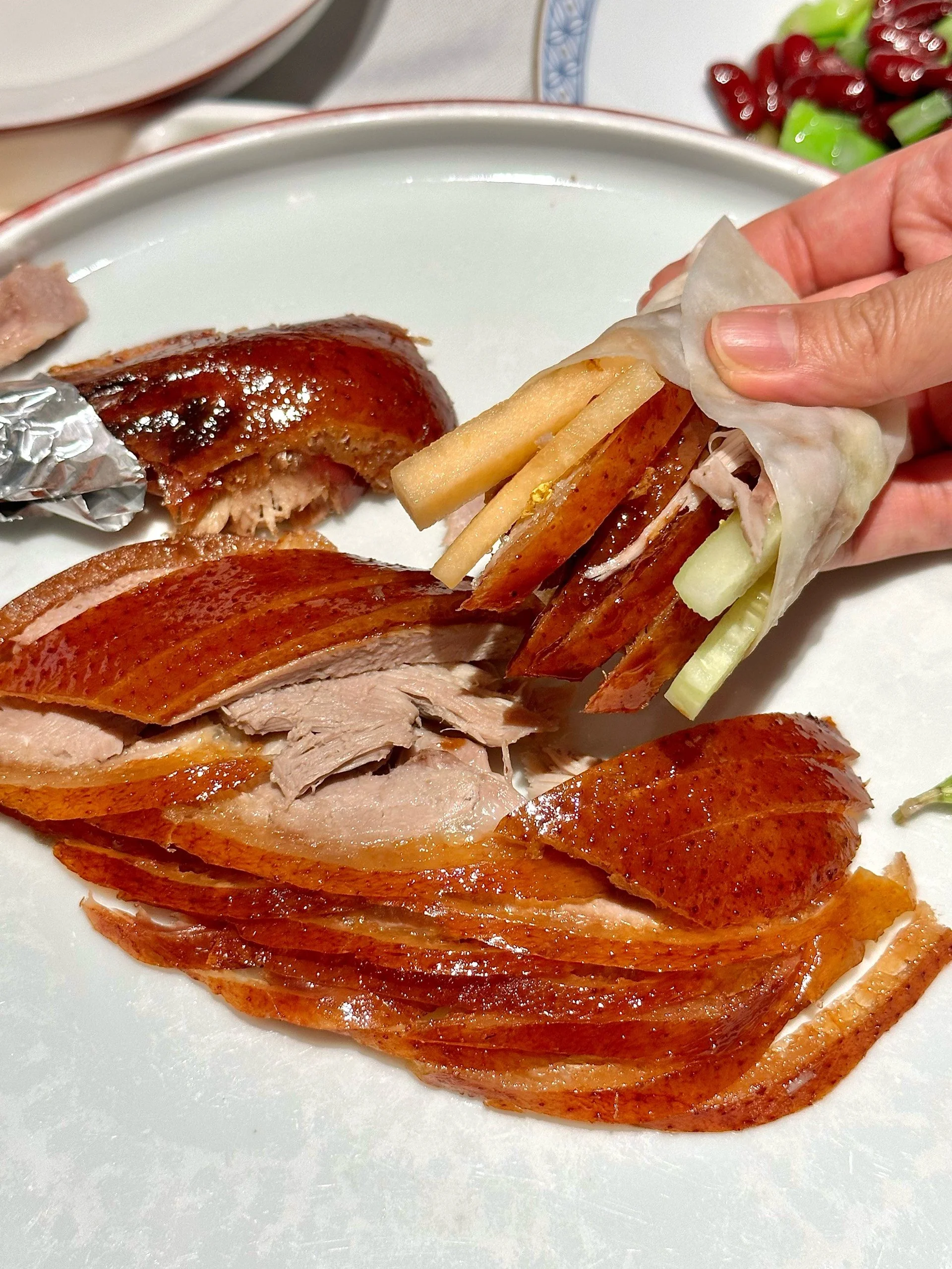
Start with the crisp skin if the restaurant serves it separately. Then use a pancake, add a little sauce, a few pieces of duck, scallion, and cucumber. Do not overload the pancake. A smaller wrap is easier to fold and gives better balance.
The sauce should support the duck, not cover it completely. Too much sauce can hide the roast flavor. Scallion and cucumber add freshness and help balance the richness of the skin and meat. If you are not sure how much to add, watch how the first wrap tastes, then adjust the next one.
For a practical eating sequence, see the guide on how to eat Peking Duck in Beijing, which covers pancakes, sauce, scallion, cucumber, duck frame soup, and table etiquette.
What Not to Add Too Quickly
Do not order too many heavy sides before the duck arrives. Fried dishes, extra noodles, rice, and large meat plates can make the table too heavy. Cold vegetables, light greens, or simple appetizers are safer if you want something before the duck.
If the restaurant offers duck frame soup or another use for the bones, decide based on appetite. It can be interesting, but it is not required. The main event is still the roast duck and the wrapping sequence.
Duck Is Different From Street Food
It helps to compare duck with smaller Beijing foods. Tanghulu is a walking snack. Jianbing can be a fast breakfast. Zhajiangmian can be a one-person lunch. Peking duck is a sit-down meal. Confusing those roles is how travelers end up eating too much in one day.
The post on a simple Beijing food day gives a lighter framework: let different foods belong to different moments instead of forcing every famous dish into one schedule.
A Simple Duck Meal Plan
If you want Peking duck for dinner, keep breakfast normal and lunch modest. Avoid a heavy afternoon snack. Arrive at the restaurant with enough appetite to enjoy the duck, pancakes, sauce, and a few supporting dishes.
For two people, consider duck plus one vegetable or cold dish. For three or four people, add one or two more dishes, but still let the duck stay central. For a larger group, variety is easier, but it is still worth ordering slowly.
The Main Rule
Do not treat Peking duck as a box to check after you have already eaten a full day of food. Give it space. Let it be lunch or dinner, not a bonus snack. When you plan it this way, the crisp skin, pancakes, sauce, and shared table rhythm make much more sense.
Beijing has many foods worth trying, but not all of them belong in the same meal. Peking duck is best when it has enough room to be the main event.


Comments
Post a Comment