Trying Douzhi in Beijing for the First Time: How to Order It Without Overcommitting
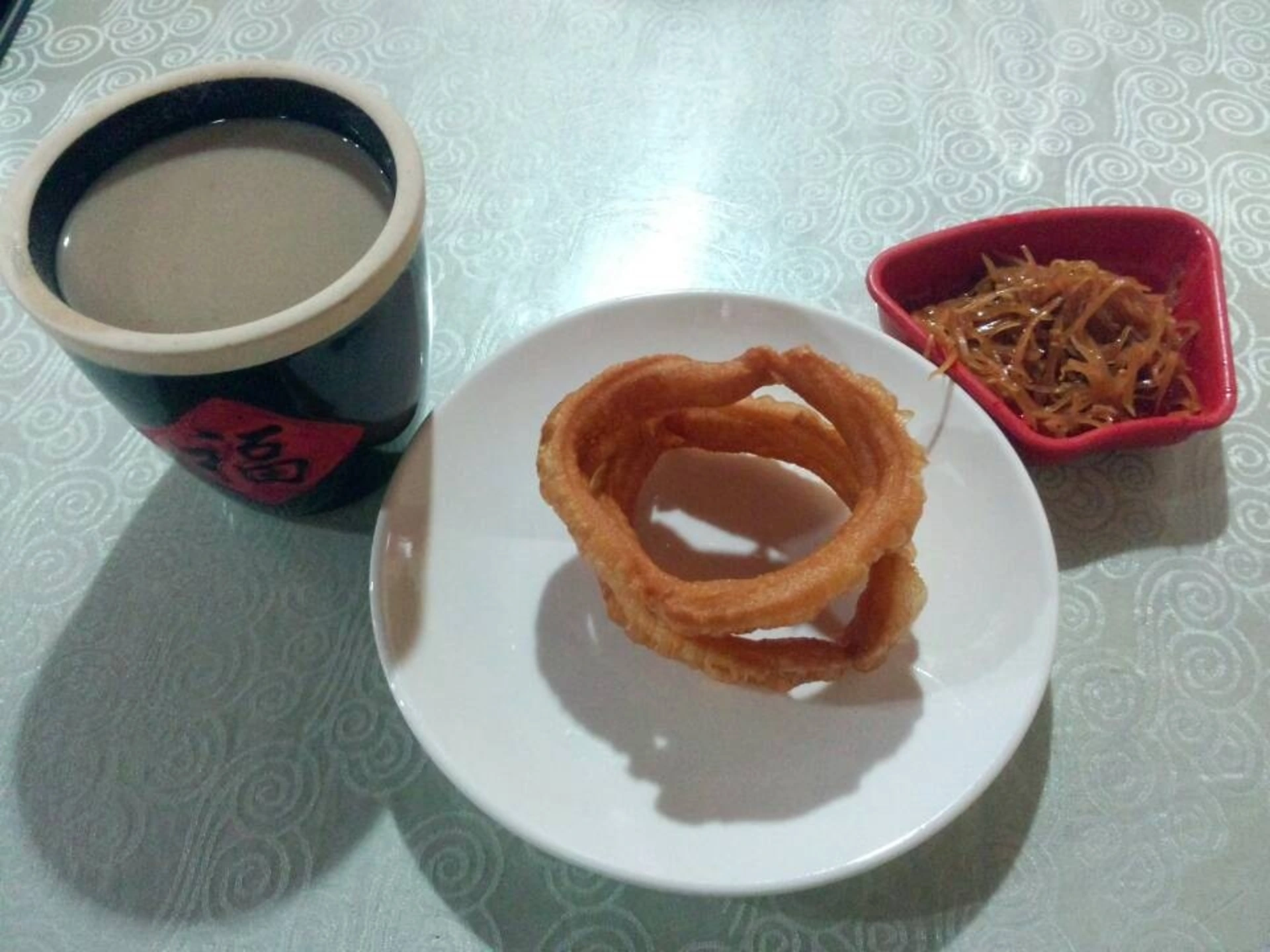
Douzhi is one of the most talked-about Beijing breakfast foods because it is not designed to please everyone immediately. It is sour, fermented, warm, and old-fashioned. Some people love it because it tastes like a direct link to local breakfast shops. Others try one spoonful and understand why visitors are warned before ordering.
The best way to try douzhi is not to make it a challenge. Treat it as part of a small breakfast, not a full meal you must finish. Order modestly, pair it with the right snack, and give yourself room to decide whether the flavor works for you.
Start With a Small Bowl
If you are trying douzhi for the first time, do not order too much. A small bowl is enough to understand the flavor. The drink is usually served warm, and its sour fermented taste becomes more noticeable as you sip. If you like it, you can order it again another morning. If you do not, you have not built your whole breakfast around it.
This is similar to the approach in the earlier post on what to order for a first Beijing breakfast: keep the first round simple, then decide what to explore next.
Pair It With Jiaoquan
Douzhi is rarely just about the drink. The classic pairing is jiaoquan, a crispy fried ring that adds crunch, oil, and a dry contrast to the sour liquid. The pairing makes more sense than drinking douzhi alone because each bite changes the next sip.
Take a small sip first, then eat a piece of jiaoquan, then sip again. The sourness may feel less sharp when it has something crisp and fried next to it. Pickles or small salty sides can also help balance the flavor.
Do Not Compare It to Soy Milk
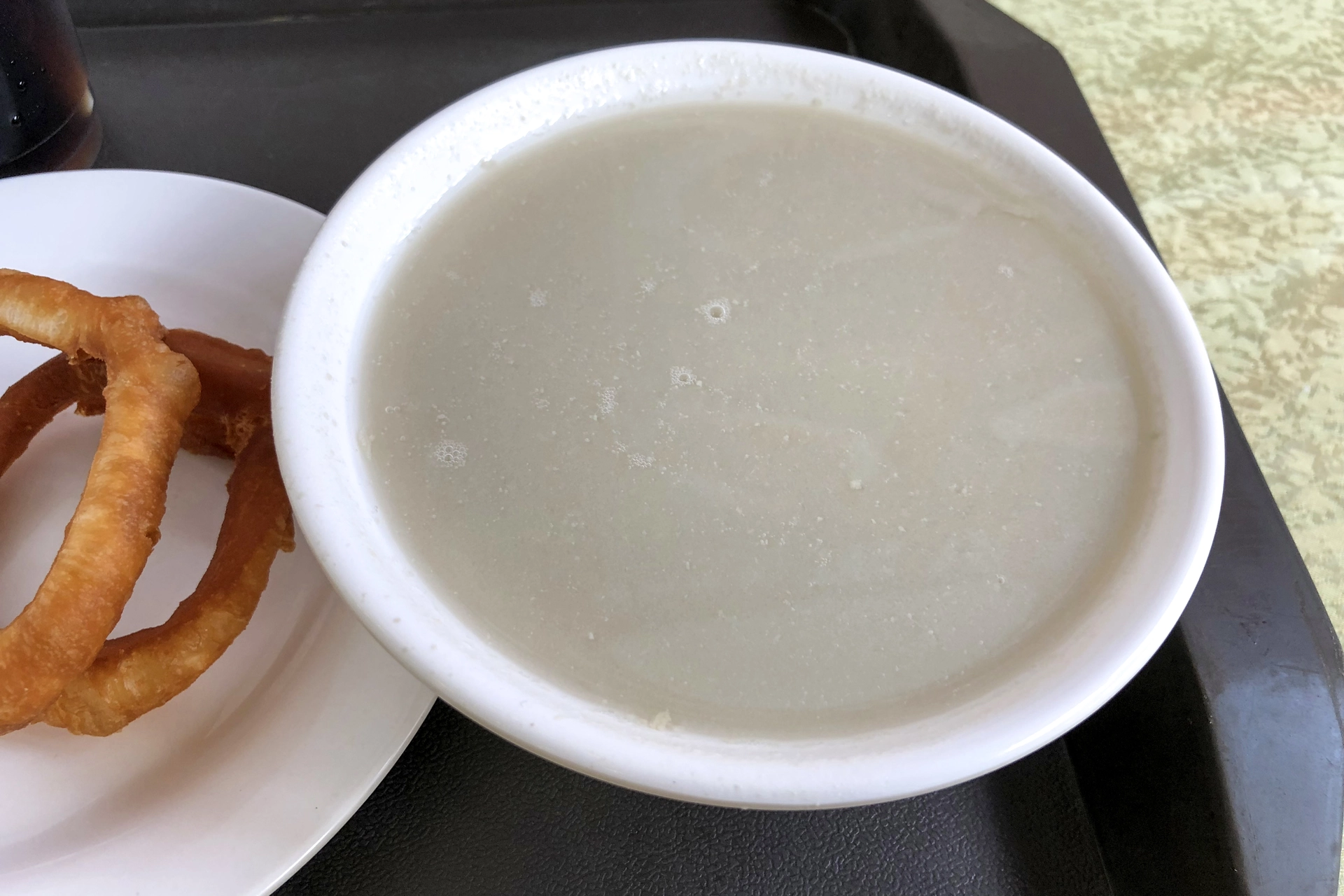
One common mistake is expecting douzhi to behave like soy milk. It does not. Soy milk is mild, smooth, and easy to like. Douzhi is fermented and sour, with a flavor that can feel unfamiliar even before you know what it is made from.
If the menu photo or counter display makes the bowl look plain, remember that the taste is the real story. The guide on reading Beijing food photos before ordering is useful here because douzhi looks much simpler than it tastes.
Use the Counter to Read the Meal
At a traditional snack shop, douzhi may appear near jiaoquan, pickles, sesame cakes, youtiao, or other breakfast items. The items placed near it tell you how locals expect it to be eaten. If many people order the same pairing, that is usually a good clue.
If you cannot read the full menu, watch the line and look for repeated orders. The earlier post on using a Beijing food menu when you do not read Chinese applies especially well to old-style breakfast counters, where pointing, observing, and matching visible dishes can solve most of the problem.
Keep the Rest of Breakfast Light
Douzhi is not heavy in the same way as noodles, duck, or hotpot, but the flavor can be intense. If you order a full set of fried dough, buns, jianbing, and other snacks at the same time, it becomes harder to understand what douzhi is doing in the meal.
A small bowl of douzhi, one jiaoquan, and maybe a simple side is enough for a first try. If you still want a more familiar breakfast afterward, choose something mild rather than adding too many strong flavors at once.
Expect a Divided Reaction
Douzhi is famous partly because reactions are divided. Some visitors find it too sour. Some locals treat it as comfort food. Some people enjoy it only with enough jiaoquan and pickles. There is no need to force a strong opinion after one bowl.
The point of trying it is to understand a local breakfast tradition, not to prove that you can finish anything. If you dislike it, you have still learned something about Beijing food culture. If you like it, the next bowl will feel much easier.
How It Fits With Other Breakfast Foods
Douzhi is best approached on a morning when you are not rushing. If you need a fast, familiar breakfast, baozi or jianbing may be easier. If you want something more local and more surprising, douzhi is worth trying.
For a more familiar comparison, the recent post on choosing jianbing fillings and sauce shows how a popular breakfast can still depend on balance. Douzhi is different, but the rule is similar: order simply first, then adjust next time.
A Safe First Order
For one person, order a small bowl of douzhi and one jiaoquan. Add pickles if they are clearly part of the set or if the shop recommends them. Sit down if possible, taste slowly, and do not judge the first sip too quickly.
If you are with another person, share the first bowl. That makes the experience lighter and gives both of you a chance to compare reactions without overordering.
The Main Rule
Do not make douzhi your whole breakfast on the first try. Make it a small, focused tasting with jiaoquan and a simple side. That keeps the experience clear, local, and low pressure.
Douzhi is not the easiest Beijing breakfast, but it is one of the most memorable. Ordered in the right size, it becomes a useful window into the city instead of a bowl you feel trapped by.


Comments
Post a Comment