How to Choose Jianbing Fillings and Sauce in Beijing Without Overloading Breakfast
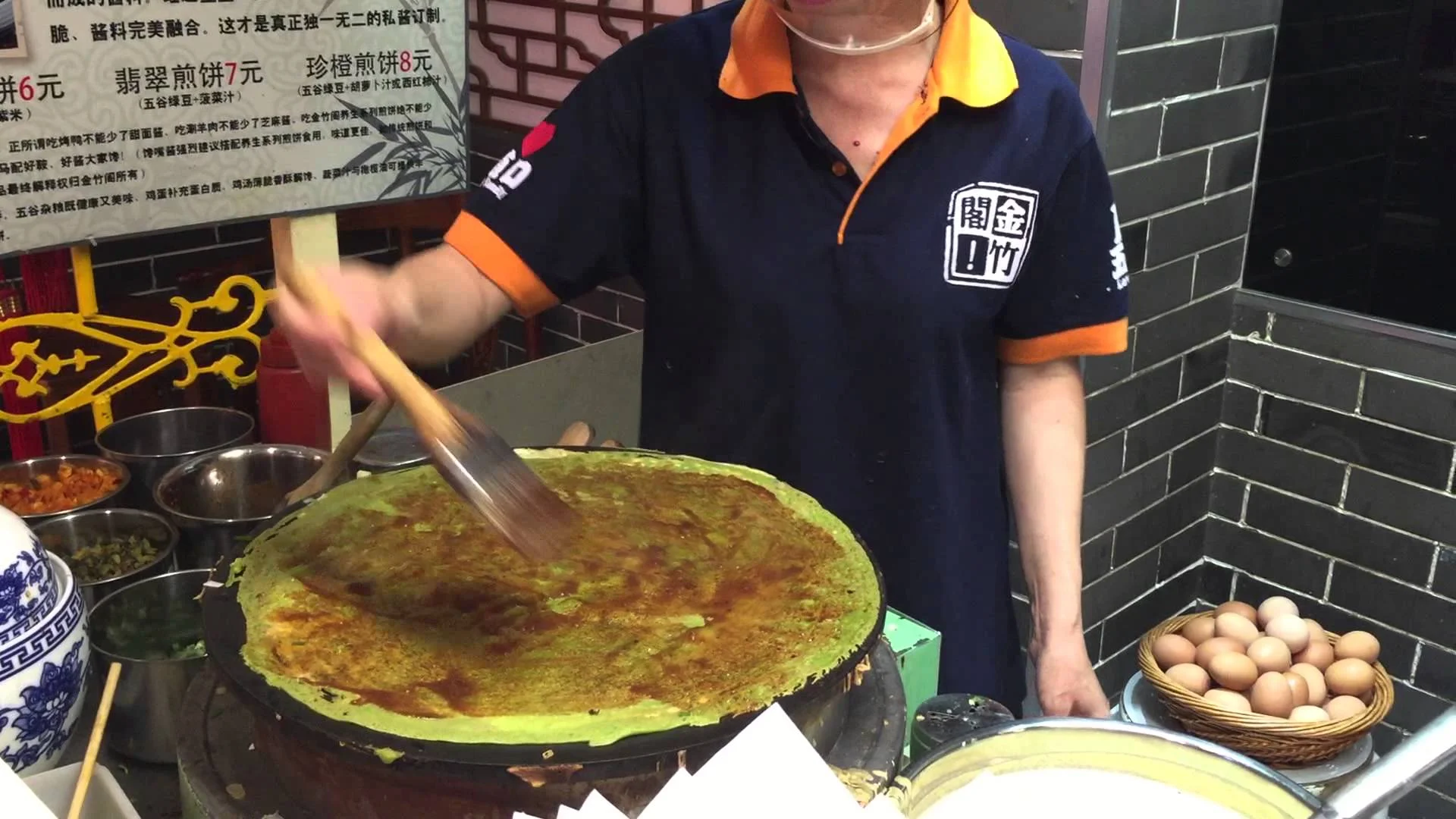
Jianbing looks like a quick breakfast, but the ordering moment can move fast. The vendor spreads the batter, cracks the egg, brushes sauce, adds herbs, places the crispy cracker, folds everything, and asks about chili or extra fillings. If you are not ready, it is easy to nod at every option and end up with a breakfast that is bigger, saltier, or spicier than you wanted.
The best jianbing order is usually simple. Egg, sauce, herbs, crispy cracker, and a little chili if you want heat are enough for most mornings. Extra sausage, meat floss, lettuce, or double crackers can be good, but they change the balance. Think of jianbing as a warm street breakfast first, not a sandwich that needs every add-on.
Start With the Base
A typical Beijing jianbing begins with thin batter spread on a hot round griddle. An egg is cracked and spread across the surface. Scallion, cilantro, sesame, or other seasonings may be added before the crepe is flipped. Then comes sauce, chili, and the crispy baocui cracker.
This base already has texture and flavor. The egg gives body, the sauce gives salt and sweetness, the herbs add freshness, and the cracker gives the snap that makes jianbing satisfying. If you are ordering for the first time, try the basic version before adding too many extras.
Decide on Chili Early
Chili is one of the easiest choices to miss because vendors often ask quickly. If you do not want chili, say no or gesture clearly. If you want a little, ask for a small amount. A thin brush of chili can be pleasant; a heavy layer can dominate the sauce and make the whole breakfast feel much stronger.
If you are still learning breakfast ordering habits, the earlier post on what to order for a first Beijing breakfast gives a useful framework: choose one clear main item and keep the rest of the meal easy.
Keep the Crispy Cracker Crisp
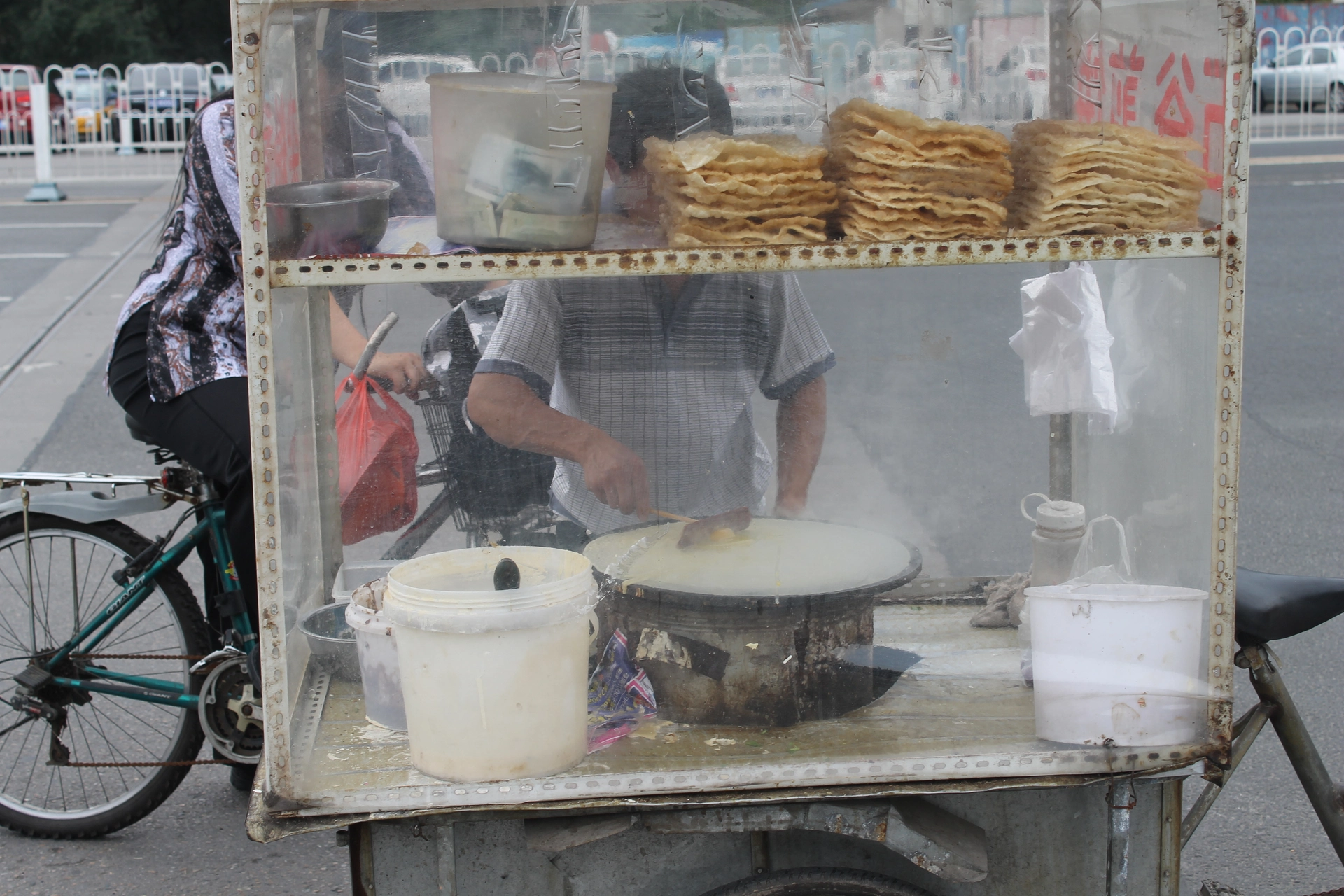
The crispy cracker is one of the best parts of jianbing. It gives contrast against the soft egg crepe and warm sauce. But it can turn soft if the jianbing sits too long or if there is too much sauce. Eat it soon after ordering, especially if you are buying from a street stall.
If you plan to walk with it, keep the order simple. Extra wet fillings or too much sauce can make the folds heavy and messy. A basic jianbing is easier to carry and easier to finish while it is still crisp.
Use Photos, But Watch the Fold
Jianbing photos often show the crepe before it is folded, when the egg, herbs, sauce, and cracker are visible. That is useful, but the final folded version may look much smaller or thicker. A photo with sausage or extra fillings may make the order look more dramatic than a normal breakfast jianbing.
The post about reading Beijing food photos before ordering fits jianbing well because the most important clues are often inside the folding process, not only in the finished food.
Be Careful With Extra Fillings
Extra fillings can make jianbing more filling, but they can also make it less balanced. Sausage adds salt and weight. Meat floss adds sweetness and texture. Lettuce adds freshness but can make the fold bulkier. Double cracker gives more crunch but may make the crepe harder to close neatly.
If you want a full meal, one extra filling is enough. If you only need breakfast before sightseeing, skip extras and let the basic version do its job. You can always try a richer version another morning.
Read the Stall Rhythm
At a busy stall, ordering is partly about timing. Have your choice ready before you reach the front. Decide whether you want chili, whether you want cilantro, and whether you need an extra filling. Pointing works, but it works better when you already know what decision you are making.
The post on using a Beijing food menu when you do not read Chinese is relevant even at a stall: repeated words, photos, prices, gestures, and the orders ahead of you all help reduce guessing.
Do Not Turn Every Breakfast Into a Tasting Menu
Jianbing pairs easily with soy milk or another light drink. It does not need baozi, noodles, fried dough, and sweets at the same time unless you are sharing with others. If you add too many breakfast items, the morning can feel heavy before the day has started.
If you want to compare breakfast foods across different mornings, keep each order focused. One morning can be jianbing, another can be baozi, and another can be douzhi or a snack-shop meal. The recent post on ordering baozi for breakfast in Beijing shows the same idea from a steamed-bun counter.
A Safe First Jianbing Order
For a first order, choose the regular jianbing with egg, sauce, scallion or herbs if you like them, the crispy cracker, and little or no chili. Skip heavy extras unless you are very hungry. Eat it soon after it comes off the griddle.
Once you know how that version tastes, try one change at a time: a little more chili, one extra filling, or a different stall. Jianbing is best when the crepe, egg, sauce, and crunch stay balanced.
The Main Rule
Choose jianbing by balance, not by the number of add-ons. Keep the first version simple, decide on chili early, protect the crispy texture, and avoid turning a quick breakfast into a heavy meal. That is enough to make the order feel clear, even when the stall is moving quickly.


Comments
Post a Comment